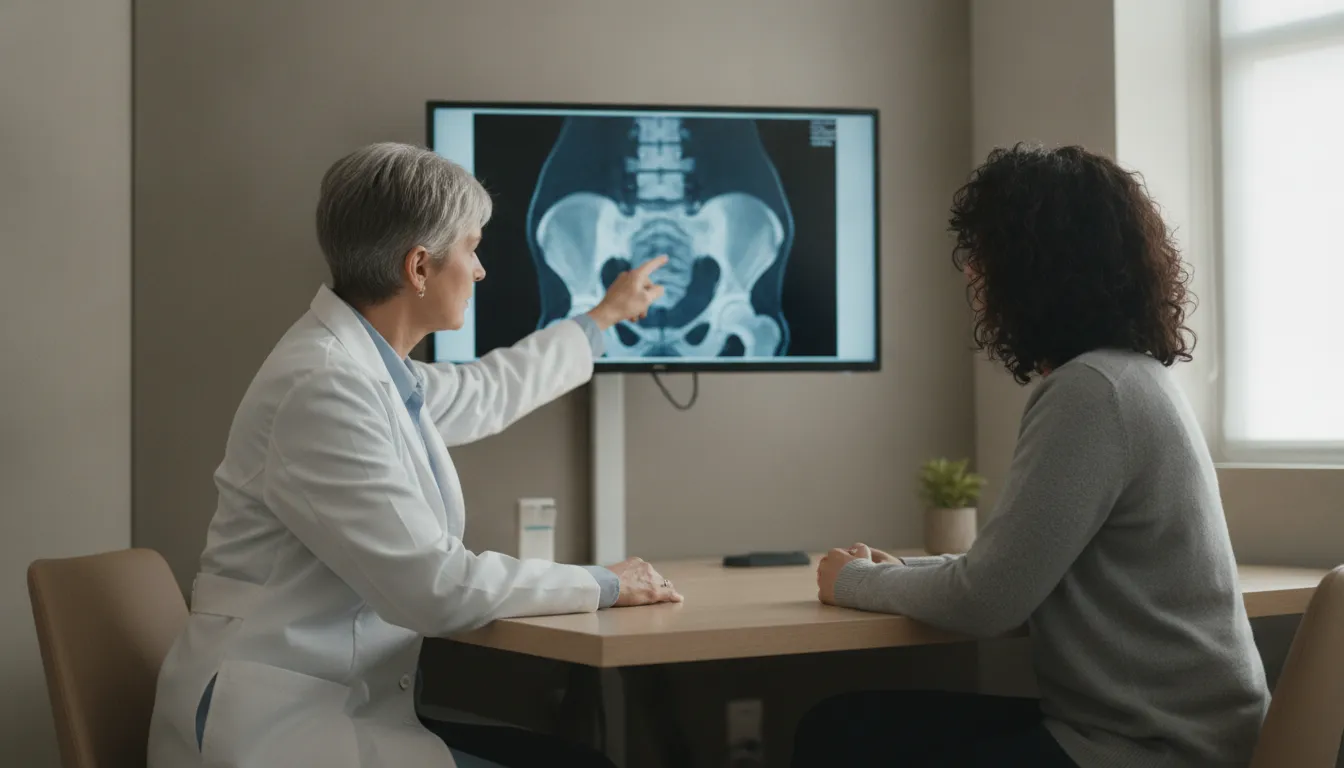
People often ask, “Can spinal stenosis be caused by a car accident?” Spinal stenosis is a narrowing of the spaces around the spinal cord or the nerves that branch from it. It often develops gradually as the spine changes over time. A car accident may not create long-term spinal stenosis instantly, but the force of a crash can cause a new spinal injury, make an existing narrowing symptomatic, or aggravate symptoms that were already present.
Whether a collision caused or worsened spinal stenosis is a medical and legal question that depends on the person’s history, the mechanics of the crash, imaging, examination findings, and the timing of symptoms. A diagnosis and causation opinion must come from a qualified medical professional. For general medical background, the American Academy of Orthopaedic Surgeons explains lumbar spinal stenosis and common causes.
If you are looking for information about a broader car accident injury claim, visit Hammack Law Firm’s South Carolina car accident practice-area page.
Talk with Hammack Law Firm about your car accident injury
Can spinal stenosis be caused by a car accident?
In many people, spinal stenosis is associated with gradual changes such as arthritis, bone growth, thickened ligaments, or disc changes. However, trauma can affect the space available for the spinal cord or nerves. For example, a crash may cause a herniated disc, a spinal fracture, a dislocation, bleeding, swelling, or an injury to supporting ligaments. One of these injuries may narrow the spinal canal or a nerve passage, or it may make an existing narrowing painful.
The answer is not determined by the fact that a person had pain after a crash or by an MRI finding alone. A scan can show narrowing, but it may not establish when the narrowing developed or what caused it. Doctors may need to compare imaging and symptoms over time and consider other possible causes.
Acute trauma can also cause symptoms that feel similar to stenosis without causing stenosis. A strained muscle, a disc injury, nerve irritation, or a fracture may affect the neck or back after a crash. That is why a medical evaluation matters instead of trying to identify the condition based on pain location alone.
Can a crash aggravate preexisting spinal stenosis?
Yes. A person may have spinal stenosis before a collision without knowing it or without having limiting symptoms. A sudden impact can cause inflammation, muscle injury, disc injury, or another change that irritates nerves in an already narrow area. A person who was managing a preexisting condition may then need new treatment, miss work, or have limitations that were not present before the crash.
In an injury claim, the important question may be whether the collision materially worsened the condition or caused new limitations, rather than whether the crash created every underlying change in the spine. That distinction is fact-dependent. A prior diagnosis does not by itself answer what the crash contributed, and symptoms after a crash do not by themselves prove the cause.
For example, a person might have occasional stiffness before a collision but later develop radiating pain, numbness, weakness, or difficulty walking. Another person might have had regular treatment and then experience a measurable change in symptoms or treatment needs. Those different baselines call for different medical and legal analysis.
What symptoms can be associated with spinal stenosis?
Symptoms depend on which part of the spine is affected and whether nerves are being compressed. Possible symptoms can include pain in the neck or lower back, pain that travels into an arm or leg, numbness, tingling, weakness, or changes in balance. Lumbar stenosis can sometimes cause leg discomfort or heaviness with standing or walking that improves with sitting or bending forward. These symptoms can also occur with other spinal conditions. For a wider look at crash injuries that often travel with spine complaints, see common car accident injuries.
Symptoms that begin immediately after a crash, symptoms that increase over the following days, and symptoms that appear after a change in activity may all be relevant to a provider’s evaluation. The timing is one part of the analysis, not a diagnosis by itself. Describe when the symptom started, where it is located, what makes it better or worse, and how it affects ordinary activities.
Why do timing and prior symptoms matter?
A provider may compare the person’s baseline before the collision with the symptoms and limitations that followed. That comparison can include whether the person was working, exercising, driving, sleeping, or performing household tasks normally before the crash. It can also include whether the person had earlier appointments, medication, therapy, injections, or restrictions related to the spine.
A gap between the crash and the first medical visit does not automatically disprove an injury. People may initially expect soreness to improve, lack transportation, have difficulty taking time away from work, or not recognize the significance of a symptom. At the same time, the reason for the gap and what happened during it may be relevant to a provider’s evaluation. A separate note on delayed diagnosis after a crash covers why a later finding can still belong in the timeline. Explain the timeline honestly and preserve any messages, appointment records, or notes that help show what occurred.
It can also help to distinguish a symptom from a diagnosis. A person may report new leg pain or numbness after a collision, while imaging later identifies stenosis, a disc injury, or another condition. The records should not be rewritten to fit a conclusion before a medical provider has evaluated the possible explanations.
Does the affected part of the spine matter?
It can. The neck, or cervical spine, and the lower back, or lumbar spine, contain different nerves and can produce different patterns of symptoms. A neck injury may affect the shoulders, arms, hands, or balance. A lower-back injury may affect the hips, legs, or feet. These descriptions are general and do not identify the cause of a symptom.
The direction and force of an impact, the person’s position in the vehicle, and the presence of other injuries may all be part of the medical history. A provider may compare those facts with the examination and imaging rather than relying on the crash description alone. Bring information about the collision and all areas that hurt to the appointment.
What records can help show what happened?
Medical and accident records can help establish a clear timeline. Depending on the circumstances, useful information may include:
- Medical records, imaging reports, and notes from before the collision.
- Emergency records, urgent-care notes, or primary-care records after the crash.
- Descriptions of pain, numbness, tingling, weakness, or changes in walking.
- MRI, CT, or other imaging after the collision, plus earlier imaging when it exists.
- Referrals, therapy records, medication changes, injections, or surgical recommendations.
- Work, exercise, household tasks, and other abilities before and after the crash.
- The crash report, photographs, witness names, and insurance communications.
It is useful to tell a medical provider about prior symptoms and conditions accurately. Leaving out relevant history can make the records harder to interpret, while a complete history helps the provider evaluate what changed after the collision.
How do doctors assess whether a crash caused or worsened stenosis?
A medical provider may review the mechanism of the collision, the first reported symptoms, the physical examination, imaging, prior records, and the course of treatment. The provider may also consider whether the symptoms fit the affected part of the spine and whether another injury or condition better explains them.
When a claim involves a preexisting condition, a medical opinion may address the person’s baseline before the collision, the changes afterward, and the treatment or limitations that followed. The records should support the opinion. A lawyer can help organize the claim and request relevant records, but a lawyer should not diagnose a spinal condition or replace medical advice. Spinal stenosis is also different from damage to the cord itself. If that is the diagnosis, start with what to do after a spinal injury and the note on spinal injury medical records.
| Information reviewed. | What it may help clarify. | What it cannot establish by itself. |
|---|---|---|
| Prior medical records and imaging. | Baseline symptoms, prior treatment, and earlier findings. | That the earlier condition caused the later symptoms. |
| Post-crash examination and imaging. | New findings, affected areas, and possible nerve involvement. | The exact date or cause of every spinal change. |
| Symptom and treatment timeline. | What changed after the collision and how care progressed. | Medical causation without a clinical reading. |
| Crash report and photographs. | Impact direction, visible damage, and reported circumstances. | The nature or severity of an internal spinal injury. |
This type of evidence works together. A provider may need the full history rather than one isolated scan, symptom, or statement.
What should you do after a crash if you have back or neck symptoms?
Seek medical attention promptly, follow the provider’s instructions, and describe all symptoms, even if they seem minor at first. Keep copies of medical records, bills, work restrictions, and appointment information. Write down how your symptoms affect sleep, movement, work, and daily activities while the details are fresh.
New or worsening weakness, significant numbness, loss of bladder or bowel control, numbness in the groin area, severe pain, or difficulty walking can require emergency evaluation. Call 911 or seek emergency care for urgent symptoms.
Do not assume that an early normal-feeling period rules out an injury, and do not assume that every later symptom came from the crash. Prompt medical evaluation and a consistent record can help clarify the situation. Before providing a detailed recorded statement or signing a settlement, consider getting advice about your specific circumstances. Hammack Law Firm’s car accident injury resource provides additional information about the claim process.
Request a consultation about your South Carolina car accident claim
How a South Carolina claim uses this medical question
A claim still has to show that another person’s carelessness caused the harm. For stenosis, the fight is often about medicine, not about whether the cars collided. The insurer may say the scan only shows ordinary aging. The response is a comparison. What was the person able to do before the crash, and what changed after it?
Keep the comparison concrete:
- Write down the first day each symptom started.
- Note walking distance, grip, sleep, and work duties before the crash.
- Save the names of the clinics and the dates of the scans.
- Ask the treating clinician whether the crash caused a new injury or made an older narrowing worse.
South Carolina gives most people three years to file a lawsuit for an injury to the person. Section 15-3-530 of the South Carolina Code lists that action within three years. Some claims use a shorter clock. Do not treat the general period as advice about your date.
There is no standard dollar figure for this injury. Bills, future care, lost wages, and daily limits all depend on the person. A meeting with Hammack Law Firm is a consultation. It is not a diagnosis, and it is not a promise about compensation.
Frequently asked questions
Can a car accident cause spinal stenosis if I never had symptoms before?
It can be possible for a crash to cause an injury that narrows a spinal space or makes previously unnoticed narrowing symptomatic. A medical evaluation is needed to identify the condition and assess possible causes. Lack of earlier symptoms is relevant, but it does not by itself establish causation.
What if I already knew I had spinal stenosis?
A prior diagnosis does not automatically determine the outcome of a claim. The focus may be on the person’s condition before the collision, what changed afterward, and what treatment or limitations followed. Prior records and a medical opinion can help distinguish baseline symptoms from an aggravation.
Can an MRI prove that a crash caused spinal stenosis?
An MRI can show narrowing, disc changes, nerve compression, or other findings. It generally cannot, by itself, identify the date a condition developed or prove that a particular crash caused it. Providers may compare imaging, symptoms, examination findings, and medical history.
Is pain after a crash always a sign of spinal stenosis?
No. Back and neck pain can have many causes, including muscle strains, disc injuries, fractures, nerve irritation, and other conditions. A qualified medical professional can evaluate the symptoms and recommend appropriate care.
When should I speak with a South Carolina car accident lawyer?
Consider seeking legal guidance promptly if you have ongoing symptoms, a preexisting spinal condition, significant treatment, lost income, or an insurer questioning whether the crash caused your injuries. Deadlines and claim requirements depend on the facts, so waiting can make it harder to protect records and evaluate your options.
Contact Hammack Law Firm to discuss your car accident injury