

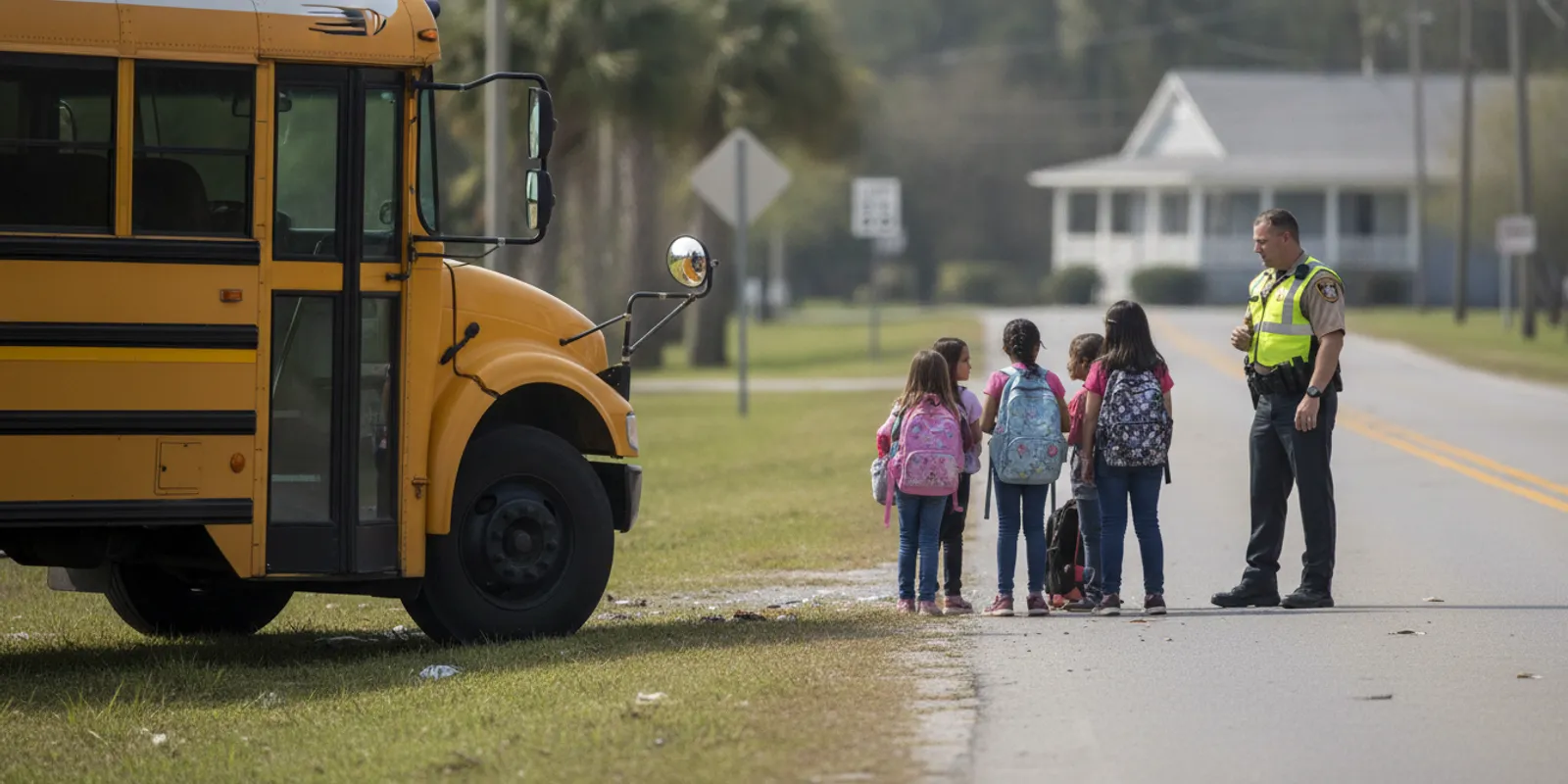
A South Carolina school bus accident can leave a child, parent, or other passenger frightened and unsure what to do next. Start with safety and medical care, then preserve what you can about the crash without guessing who caused it. This guide explains practical steps for families and injured passengers as they learn what happened and consider their options.
Contact Hammack Law Firm to discuss a school bus crash.
What should you do first after a school bus crash?
At the scene, prioritize people over paperwork. Follow directions from emergency responders and school staff, and do not put yourself or a child in the path of traffic to collect information. If the bus is in a dangerous position, wait for responders to help passengers move safely.
- Call 911 when anyone may be hurt, there is immediate danger, or emergency services are needed. Give the location and explain that a school bus is involved.
- Tell the driver or responders about any pain, impact, or change in how a passenger feels. A child may be scared, quiet, or unable to describe an injury clearly. Do not assume that someone is unhurt because they can walk or speak.
- Follow instructions about staying on the bus or evacuating. Do not return to a damaged bus or cross a roadway without help.
- Ask who is accounting for the students and where they will be taken. A parent or guardian should learn the child’s destination and the name of the adult responsible for supervising them.
- Share your contact information with the appropriate responder or school representative. If a child is separated from a parent, give responders identifying information directly rather than posting it publicly.
South Carolina news coverage of a fatal school bus crash in Chester County illustrates why families should treat a bus collision seriously, even when the circumstances of a different crash say nothing about responsibility in their own case. WFAE reported on that Chester County crash.
When should an injured passenger get medical care?
Arrange prompt medical attention when a child or adult reports pain, was thrown or struck, hit their head, or otherwise may have been injured. For an emergency, use 911 or go to an emergency department. For concerns that are not an emergency, contact a health care provider and follow their advice. A parent should describe what happened as accurately as possible, including any impact, sudden movement, or contact inside the bus.
Some children may not recognize or explain symptoms right away. A calm check-in can help: ask what hurts, whether they feel dizzy or nauseated, and whether anything feels different. Watch for changes in behavior or complaints that arise later, and seek medical guidance when concerned. Do not diagnose an injury yourself or rely on a school note as a substitute for medical care.
Keep a record of appointments, care instructions, medications, and any missed school or activities. Save bills and paperwork, but focus first on the child’s health. If a provider recommends follow-up, make a note of the appointment and keep copies of the relevant records. Families can find additional general steps for a collision in Hammack Law Firm’s guide to what to do at an accident scene; a bus crash can involve different people and procedures, so treat that page as general background rather than a bus-specific checklist.
How should you report the crash and contact the school?
Emergency responders may prepare a report, and a school district or bus operator may have its own incident process. Make a note of the date, approximate time, road or location, bus number if visible, and the names or roles of people you speak with. Ask which agency responded and how to request the applicable report. The steps for obtaining a report can vary, but this South Carolina crash-report guide offers a starting point for understanding the process.
Contact the school or district promptly to confirm the child’s status and learn how the incident is being documented. Keep the conversation calm and factual. Useful questions may include:
- Where was the child seated, and who was supervising the bus?
- What time did the bus leave its route, stop, or arrive at the location?
- Was another vehicle involved, and did the bus continue to the school or another location?
- Who is the point of contact for families seeking incident information?
- Are there forms or written instructions families should review, and how can copies be requested?
- Will the school preserve available records, such as route information, bus video, or communications about the incident?
Follow up in writing when it helps create a clear record of what you requested and when. A short email can summarize a phone conversation and ask the recipient to correct any misunderstanding. Keep copies of messages, letters, and forms. Be cautious about signing documents you do not understand, particularly a release or statement that appears to resolve a claim. You can ask for time to review it and seek legal advice before signing.
What information should families document?
Write down what you or the child remembers as soon as reasonably possible. Use the child’s own words when recording their account. Avoid repeated, leading questions or pressing a child to fill gaps in memory. Children may recall details gradually, and it is better to mark something as uncertain than to guess.
Depending on what is available, keep:
- The crash date, time, location, route, bus number, and names or contact details for witnesses.
- Photographs of visible damage, the scene, or an injury, if they can be taken safely and lawfully.
- Names of responding agencies, report or incident reference numbers, and instructions provided at the scene.
- School or operator notices, emails, text messages, attendance records, and written incident information.
- Medical records, appointment dates, bills, care instructions, and notes about symptoms or daily activities affected.
- Receipts for reasonable out-of-pocket expenses connected to the injury, and records showing missed school, work, or activities.
Preserve original messages and files when possible. Store copies in a secure place and keep a simple timeline of events, calls, and requests. Do not edit photos or delete messages that may later help explain what occurred. Avoid sharing a child’s medical details, identifying information, or images of injuries on social media. Public posts can spread beyond the intended audience and may complicate later discussions about the event.
Who may be responsible for a South Carolina school bus accident?
Responsibility cannot be determined from the fact that a bus was involved. It depends on evidence about how the crash happened, who controlled the bus and route, and what actions or conditions contributed. Potentially relevant parties may include a bus driver, a school district or other public entity, a private bus operator, a company responsible for maintenance, another driver, or a manufacturer if a vehicle defect is suspected. Not every crash involves each of these parties, and naming a party does not establish fault.
An investigation may consider the roadway and weather, traffic signals, vehicle damage, driver actions, training and supervision, maintenance records, route details, witness accounts, and available video. Records may be held by different organizations and may not remain available indefinitely. A family can ask the school or operator to preserve relevant material, but should not trespass or attempt to access restricted systems or vehicles.
When a government entity may be involved, special legal rules can apply. Which rules matter depends on the facts and the parties involved. Do not assume that the ordinary process or deadline applies to every claim. A lawyer can review the circumstances, identify potential parties, and explain what information should be obtained. Hammack Law Firm represents people with personal injury matters, and its South Carolina personal injury practice provides general information about the firm.
How should you handle insurance calls and written requests?
An insurer or organization connected to the bus may contact a family to ask questions or request records. Before responding, find out who the caller represents, what claim or incident they are discussing, and whether they want a recorded statement or a signed authorization. You can ask for the request in writing and take time to understand it. Do not speculate about speed, distance, fault, or what another person saw.
Share accurate information, but do not guess when you do not know an answer. It is reasonable to say that you need to check a date or do not remember. Read any form carefully before signing. A broad medical-record authorization may request more information than is needed for a particular purpose, and a release may affect legal rights. Consider getting advice before providing a recorded statement or signing a release, especially when a child is involved.
Keep a log of calls, including the caller’s name, organization, date, and requested action. Save letters and envelopes. If you receive an offer or a document with a deadline, note the date and seek prompt advice rather than allowing it to sit unanswered. A separate page on South Carolina car accident filing deadlines addresses one type of claim; it does not establish the deadline for every bus crash, party, or injured person.
What should parents know when a child is injured?
A parent or guardian will often need to coordinate care, school communication, and record keeping for a minor. Ask the school how it will help the child return to class or activities, and share only necessary health information with the people responsible for supporting the child. Keep the child’s routine as steady as possible while following medical guidance.
Children may respond to a frightening event with changes in sleep, mood, concentration, or willingness to ride the bus. If you notice a change, document it and discuss concerns with an appropriate health care provider. Avoid promising a particular legal or financial outcome. Reassure the child that adults are working to understand what happened, and let the child describe the event in their own words without blame.
A claim involving a minor can raise questions about who may speak for the child, how records are handled, and whether a proposed resolution requires additional review. The answer depends on the circumstances and applicable law. Do not assume that a parent can sign away every right belonging to a child or that a settlement process is the same as for an adult. Ask a lawyer to explain the process before agreeing to resolve a child’s claim.
How do possible next steps compare?
Families may be handling several tasks at once. This table can help organize them; it is not a substitute for emergency instructions or advice tailored to a particular claim.
| Need | Who to contact | What to do | What to keep |
|---|---|---|---|
| Immediate danger or urgent injury | 911, emergency responders, or emergency medical services | Give the location, explain that a school bus is involved, and follow safety directions | Responder names or agency details when available |
| Medical assessment and follow-up | Health care provider | Describe the crash and symptoms accurately; follow care instructions | Appointment information, records, bills, and care notes |
| Student location and school process | School, district, or bus operator | Confirm supervision and destination; ask how to request incident information | Names, dates, messages, and written responses |
| Crash documentation | Responding agency and relevant record holder | Ask how to request a report and preserve available records | Reference numbers, request copies, and correspondence |
| Questions about responsibility or a claim | A lawyer familiar with injury matters | Discuss the facts, possible parties, records, and any time-sensitive steps | A timeline, documents, and questions you want answered |
When should a family speak with a lawyer?
Consider seeking legal guidance if a passenger was injured, the cause is disputed, several organizations may be involved, an insurer requests a statement or release, or the injured person is a child. It can also help to ask questions when records are hard to obtain or the family is unsure which deadlines apply. An early conversation may help identify records to preserve and explain options; it does not require a family to reach a conclusion about fault before the facts are known.
Bring what you have, not a complete case file. A useful first discussion may include the crash date and location, the child’s or passenger’s symptoms and care, the bus or operator information, any report number, and copies of communications or forms. If a detail is unknown, say so. Avoid delaying necessary medical care while gathering paperwork.
Ask Hammack Law Firm about your options after a bus crash.
Frequently Asked Questions
Should I wait to see whether my child develops symptoms?
Do not use a wait-and-see approach in place of medical guidance. If a child reports pain, hit their head, was thrown or struck, or shows a concerning change, contact a health care provider or emergency services as appropriate. A clinician can advise whether an examination or follow-up is needed.
Does a school bus accident automatically mean the school is responsible?
No. The responsible parties, if any, depend on the evidence and the circumstances. A driver, operator, district, another motorist, or another party may be relevant to an investigation, but involvement alone does not prove fault.
Can a parent give a recorded statement for an injured child?
A parent may be asked to answer questions, but should first learn who is asking, whom they represent, and how the statement may be used. You can request the questions in writing and seek legal advice before making a recorded statement, particularly if the child was injured or responsibility is disputed.
How long does a family have to take legal action?
There is no single deadline that can safely be applied to every school bus crash. The relevant time limit may depend on the people and organizations involved, the injury, and other facts. Because special rules can apply when a public entity or a minor is involved, get advice promptly rather than relying on a general deadline.
What if no police report was made at the scene?
Ask the school, bus operator, or responding agency whether an incident record exists and how to request it. Keep your own dated account, contact information, and medical records. If you are unsure which agency handled the crash, a lawyer may help identify where to direct a records request.
Contact Hammack Law Firm to talk about the next steps for your family.
A conversation can help your family understand possible next steps.


