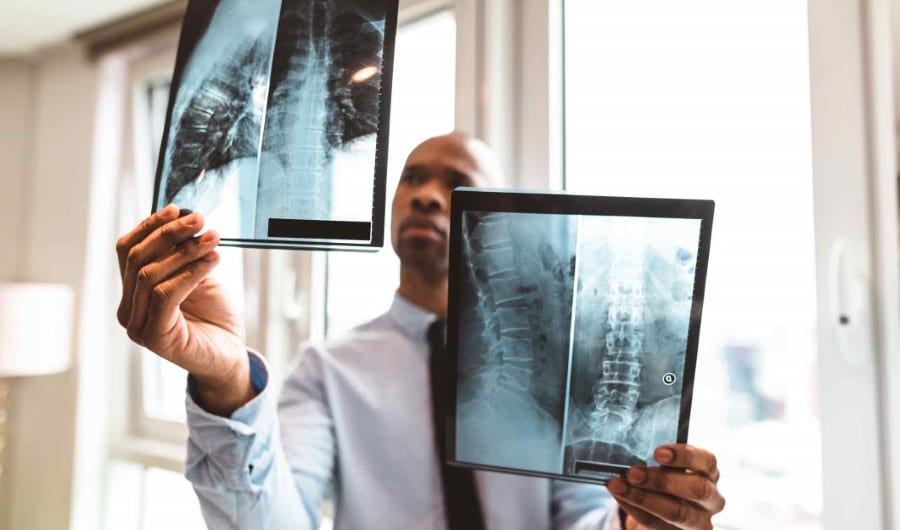
Spinal cord injuries are among the most challenging and debilitating injuries to recover from. Unfortunately, those who have been involved in car accidents probably know them all too well.
While any type of car accident injury can be serious, spinal cord injuries can have long-lasting effects on your health and well-being, requiring victims to pay large amounts of money for things like doctor’s visits, pain management, and rehabilitative care.
Spinal cord injuries refer to a broad category of injuries – in fact, several different types of injuries are most likely to occur during a car wreck. Understanding the types of spinal cord injuries, their long-term effects, and your legal options for compensation is essential for protecting your future.
If you or a loved one has suffered a spinal cord injury in a South Carolina car accident, call (864) 326-3333 to speak with an experienced attorney at Hammack Law Firm about your case.
How Car Accidents Cause Spinal Cord Injuries
Car accidents produce forces that the human body is not designed to withstand. The sudden impact of a collision can cause the spine to bend, twist, or compress in ways that damage the delicate spinal cord and surrounding structures. The most common mechanisms of spinal cord injury in car accidents include:
- Sudden impact: The force of a collision can cause vertebrae to fracture or dislocate, directly damaging the spinal cord.
- Whiplash effect: Rapid back-and-forth motion of the head and neck can stretch and tear spinal nerves and ligaments.
- Penetrating trauma: Debris or broken vehicle parts can directly pierce the spinal column.
- Compression: The weight of the vehicle or the force of being pinned can crush the spine.
According to the National Spinal Cord Injury Statistical Center, motor vehicle accidents are the leading cause of spinal cord injuries in the United States, accounting for nearly 38% of all reported cases. In South Carolina, where many highways and rural roads present unique driving challenges, the risk of serious spinal injuries in car accidents is particularly significant.
Understanding how to navigate a spinal cord injury claim in SC can help you prepare for the legal process ahead.
Herniated Discs
The spinal cord is made up of a series of bones, or vertebrae, cushioned by small, spongy discs to protect the bones from rubbing against one another. In a car accident, the force of the impact can cause these discs to bulge or rupture, leading to pain and numbness in the affected area. Symptoms of a herniated or ruptured disc include radiating pain throughout the body or numbness in specific regions of the body.
Fractured Vertebrae
Sometimes during an accident, the body can be jerked swiftly in opposing directions before returning to place. This can put significant pressure on the spinal column, sometimes resulting in a compression fracture. Fractured vertebrae occur when the spinal column bones are broken, leading to symptoms such as pain, weakness, and loss of sensation.
Additionally, compression fractures can cause spondylolisthesis, a condition where fractured vertebrae place excessive pressure on the spinal column, causing it to shift. Symptoms often include things like pain and numbness in the body and bladder control problems.
Complete vs. Incomplete Spinal Cord Injuries
Medical professionals classify spinal cord injuries as either complete or incomplete, and the distinction has significant implications for both recovery and legal compensation:
- Complete SCI: The spinal cord is fully severed or damaged to the point that no signals can pass below the injury site. This results in total loss of sensation and motor function below the level of injury (paraplegia or quadriplegia).
- Incomplete SCI: Some signals can still pass through the injured area. The victim may retain partial sensation or movement below the injury level. Many incomplete SCIs improve with treatment and rehabilitation.
The type and severity of your spinal cord injury will directly affect the compensation you may be entitled to. More severe injuries typically require lifelong medical care, resulting in higher damages.
Spinal Cord Compression
If the spinal cord is compressed or pinched due to the impact of a car accident, it can cause a range of symptoms, including pain, numbness, and difficulty moving.
Spinal Stenosis
While spinal stenosis is not caused by the injuries sustained during a car accident, a car crash can cause symptoms of spinal stenosis to worsen. It may also cause asymptomatic cases to become symptomatic.
Various factors, including aging, arthritis, herniated discs, spinal injuries, and tumors can cause spinal stenosis. In some cases, it can be present at birth or develop as a result of a congenital condition.
Common symptoms of spinal stenosis include pain, numbness, weakness, and tingling in the affected area. These symptoms can range from mild to severe and can affect a person’s ability to walk, stand, or perform other daily activities. Some people may also experience bladder or bowel dysfunction, which can indicate severe spinal stenosis and require immediate medical attention.
Whiplash and Soft Tissue Injuries
While not technically a spinal cord injury, whiplash is a common injury in car accidents that can cause damage to the neck and spine. Whiplash occurs when the head and neck are suddenly jerked forward and back, causing strain on the neck muscles and ligaments.
The symptoms of whiplash can be deceptive. While some people experience immediate pain and stiffness, others may not feel any discomfort for 24 to 48 hours after the accident. Common whiplash symptoms include neck pain, stiffness, headaches, dizziness, blurred vision, and difficulty concentrating. In some cases, whiplash can lead to chronic pain that persists for months or even years, significantly impacting quality of life and the ability to work.
Even relatively low-speed collisions can cause whiplash injuries. Insurance companies often try to minimize the severity of whiplash claims by arguing that the impact was minor. However, medical evidence and proper documentation can establish the true extent of your injury and the compensation you deserve.
This occurs when the head and neck are suddenly jerked forward and back, causing strain on the neck muscles and ligaments. Whiplash can cause chronic pain, reduced range of motion, and long-term discomfort that affects daily life.
Long-Term Costs and Complications of Spinal Cord Injuries
Spinal cord injuries carry some of the highest long-term costs of any injury type. Victims often face:
- Lifelong medical care and monitoring
- Physical and occupational therapy
- Home modifications for wheelchair accessibility
- Specialized transportation needs
- Lost earning capacity due to disability
- Pain management and mental health counseling
- Assistive devices and technology
- Personal care assistance for daily activities
The financial impact of a spinal cord injury can easily reach millions of dollars over a lifetime. For a comprehensive overview of your legal options, read our complete guide to spinal cord injury claims in SC.
Compensation Available for Spinal Cord Injuries in South Carolina
Under South Carolina law, victims of spinal cord injuries caused by car accidents may be entitled to seek compensation for:
- All past and future medical expenses, including surgery, hospitalization, rehabilitation, and medication
- Lost wages and loss of future earning capacity
- Pain and suffering, both physical and emotional
- Loss of enjoyment of life
- Loss of consortium for spouses
- Punitive damages in cases of gross negligence or reckless conduct
- Costs of home modifications and assistive devices
At Hammack Law Firm, we work with medical experts, economists, and life care planners to accurately calculate the full extent of your damages. We fight to ensure that you receive compensation that truly covers your needs, not just a quick settlement offer from the insurance company.
Call (864) 326-3333 to discuss the specific facts of your case with an experienced spinal cord injury attorney.
How a Spinal Cord Injury Lawyer Can Help
Navigating a spinal cord injury claim while dealing with life-altering medical challenges is overwhelming. An experienced personal injury attorney can:
- Investigate the accident to identify all liable parties
- Gather and preserve critical evidence before it is lost
- Work with medical experts to document the full extent of your injuries
- Calculate the true long-term cost of your injury
- Negotiate aggressively with insurance companies
- Take your case to trial if a fair settlement cannot be reached
If the accident occurred in Greenville, our Greenville car accident practice page provides location-specific information that may be helpful to your case.
Seeking Medical Attention Is the Most Important Thing To Do After a Car Accident
It is important to note that not all spinal cord injuries are immediately apparent, and in some cases, symptoms may not develop until days, weeks, or even months after the accident. This is why seeking medical attention as soon as possible after a car accident is essential, even if you do not think you have been seriously injured.
Additionally, having clear medical documentation and a recorded timeline of your injuries is critical to developing a solid claim, especially if previous spinal cord injuries existed prior to the accident. Even if you do not suspect injuries are present following your car accident, it is still essential to visit the doctor should your symptoms present in the weeks following your wreck.
Spinal Cord Injury FAQ
What are the most common spinal cord injuries from car accidents in SC?
The most common spinal cord injuries from car accidents include herniated discs, fractured vertebrae, spinal cord compression, and spinal stenosis. These injuries can range from mild to severe and may result in temporary or permanent disability.
How much compensation can I get for a spinal cord injury in South Carolina?
Compensation varies widely based on the severity of the injury, the cost of medical care, the impact on your ability to work, and the circumstances of the accident. Severe spinal cord injuries can result in settlements or verdicts ranging from hundreds of thousands to millions of dollars.
What is the statute of limitations for spinal cord injury claims in SC?
South Carolina generally allows three years from the date of the accident to file a personal injury claim for a spinal cord injury. However, certain circumstances may affect this deadline. Consulting with an attorney promptly is the best way to protect your rights.
How long does a spinal cord injury lawsuit take?
The timeline varies based on the complexity of the case. Some cases settle within 6-12 months, while others may take 2-3 years if they proceed to trial. Your attorney can provide a more specific estimate based on the facts of your case.
South Carolina’s Modified Comparative Negligence Rule
South Carolina follows a modified comparative negligence rule (S.C. Code Ann. § 15-38-15), which means that you can recover compensation even if you were partially at fault for the accident, as long as you were less than 50 percent responsible. However, your compensation will be reduced by your percentage of fault.
For example, if you are found to be 20 percent at fault for the accident that caused your spinal cord injury, your total compensation would be reduced by 20 percent. This makes it essential to have an attorney who can present evidence that minimizes any allegation of fault against you.
Insurance companies frequently try to shift blame onto accident victims to reduce their payout. Having experienced legal representation at Hammack Law Firm ensures that your rights are protected and that you are not unfairly blamed for the accident that caused your life-changing injury.
Conclusion
If you have been diagnosed with a spinal cord injury due to a car accident, it is important to work with an experienced personal injury attorney who can help you understand your legal options. In many cases, you may be entitled to compensation for your medical expenses, lost wages, and other damages related to the accident.
At the end of the day, it is important to remember that while spinal cord injuries can be serious, you do not have to face the challenges alone. With proper medical care and the support of an experienced legal team, you can get the help you need to recover and move forward after a car accident.
Contact Hammack Law Firm today at (864) 326-3333 for a free consultation. Let us put our experience to work for you.

With over 25 years of legal experience, Paul Hammack provides his clients with a level of trial expertise and strategic insight rarely found in personal injury litigation. Having spent the first eight years of his career working within major insurance defense firms across Georgia and South Carolina, Paul gained an intimate understanding of the “other side’s” playbook. This insurance industry background serves as a unique differentiator for his clients; he knows exactly how insurance carriers evaluate risk and what motivates them to pay top dollar for a claim.
In 2008, Paul founded Hammack Law Firm to move away from the “plaintiff mill” model and focus on building personal relationships with those he represents. As a seasoned litigator, he has tried dozens of first-chair cases to verdict, specializing in high-stakes litigation involving catastrophic injuries and complex truck accidents. His dual-state practice allows him to provide aggressive representation across both South Carolina and Georgia, ensuring victims of negligence receive the maximum financial compensation possible regardless of which side of the state line the accident occurred.
Paul’s commitment to excellence is reflected in his record of significant achievements, including a $10 million tractor-trailer wrongful death settlement and a $3.9 million moped-versus-truck recovery. His credentials and bar admissions in both South Carolina and Georgia underscore his deep roots in the regional legal community. Beyond the courtroom, Paul is a dedicated advocate for his local community, contributing his time and resources to organizations such as the United Way, Red Cross, and Hands On Greenville, all while working to make South Carolina a safer place for everyone.