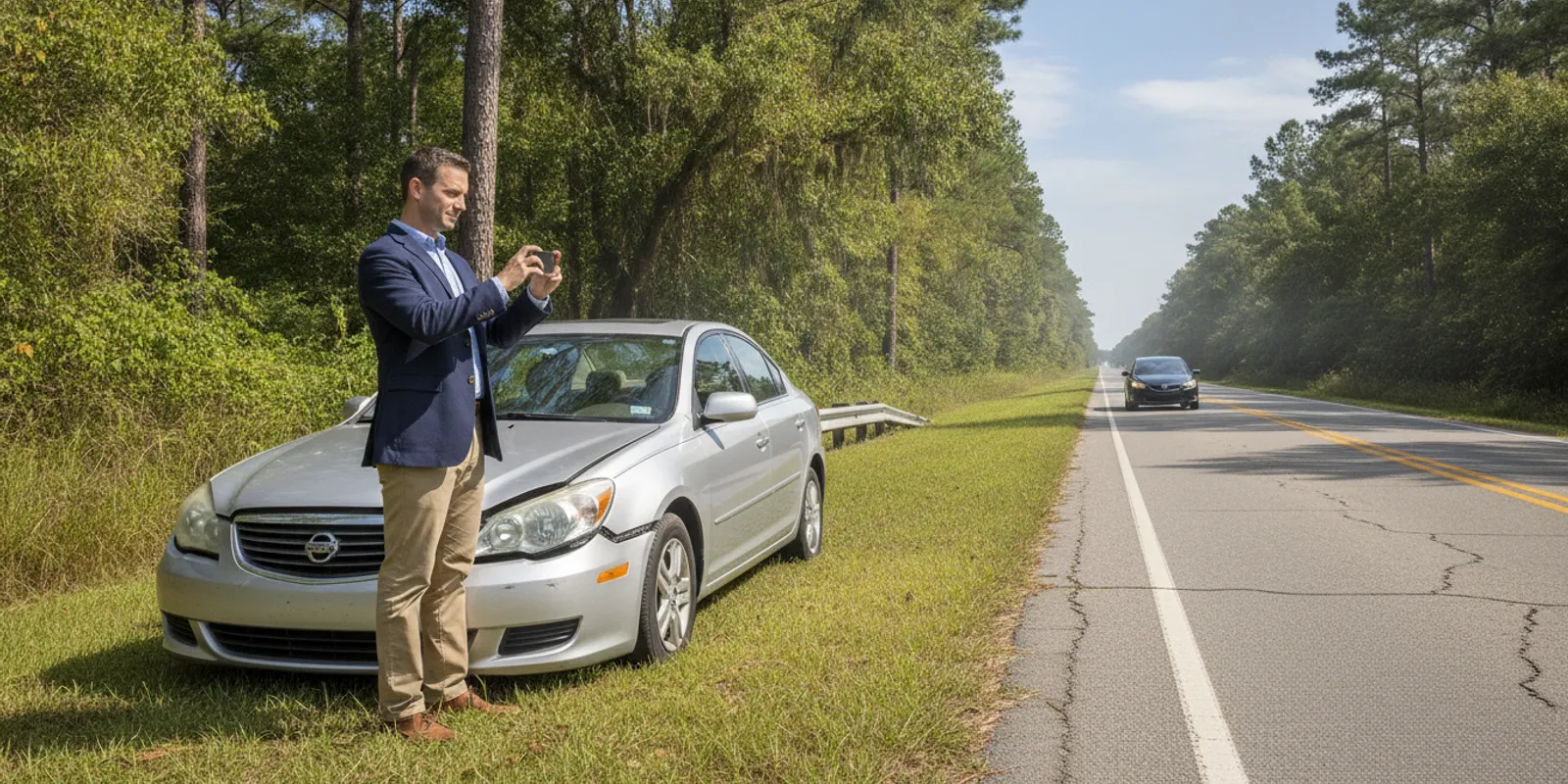
If another driver leaves after a collision, you may be shaken, hurt, and unsure what to do first. Knowing what to do after a hit and run car accident can help you focus on safety, get the incident documented, and preserve details that may matter later. If you are in immediate danger or someone may be seriously hurt, call 911.
Talk with Hammack Law Firm about your situation
What should you do first at the scene?
Start with people, not paperwork. Check yourself and any passengers for injuries, but do not move someone who may have a serious neck, back, or head injury unless staying put creates an immediate danger. If the vehicles are in an active lane or another unsafe spot, move to a safer place if you can do so without worsening an injury. Turn on hazard lights when possible.
Call 911 if anyone is injured, traffic is blocked, the scene is unsafe, or you need police assistance. Give the dispatcher your location as clearly as you can: a street address, intersection, nearby landmark, or highway direction and exit. Tell them that the other driver left and describe the vehicle only to the extent you know. Do not chase the vehicle. Pursuit can create another collision and may make it harder to remember useful details.
If no one appears to need emergency help and the cars are out of danger, still take a moment to steady yourself and note what happened. Avoid arguing with other drivers or witnesses. Do not guess about speed, fault, or details you did not observe. A simple, accurate account is more useful than a confident guess. If you are too shaken to take notes, ask a passenger or trusted person to help record basic details once everyone is safe. Make a note of the time you wrote them down, and keep the original account rather than repeatedly rewriting it from memory.
How should you report a hit-and-run crash?
Report the crash to law enforcement as soon as you reasonably can. Follow the dispatcher’s instructions at the scene, and ask how to obtain the report or incident number. If an officer does not come to the scene, contact the appropriate law-enforcement agency and ask what reporting steps apply to your situation. Keep the date, time, agency name, and any report number together with your other records.
When describing the event, separate what you saw from what you inferred. For example, describe a dark SUV striking the rear of your car and turning onto Main Street rather than identifying a make or model you could not see. If you remember only part of a plate, record the characters you are certain about and mark the rest as unknown. Do not fill gaps by guessing.
Read any statement or report information you are asked to confirm before signing or submitting it. If you later notice a factual error, ask the agency how to provide a correction or supplemental statement. A South Carolina thesis specifically examined discrepancies in traffic-collision forms and the accuracy of recorded information, which is one reason to check that the details you provide are clear and accurate: research on South Carolina traffic collision forms.
Keep your own notes even after you have reported the crash. Write down the officer’s name or identification details if available, the report number, and any instructions about obtaining a copy. When you later receive a report, compare names, dates, vehicle descriptions, and the general sequence with your notes. If something seems incomplete or inaccurate, ask the agency how it handles additions; do not alter an official copy yourself. You can also review general injury questions through the firm’s personal injury FAQs.
Why should you get medical care promptly?
Get emergency care for urgent symptoms. For other pain or concerns, contact a health-care professional promptly and follow the advice you receive. Do not assume that feeling able to leave the scene means you were not injured. Pain, stiffness, dizziness, or other symptoms may become more noticeable after the immediate stress has passed.
Tell the clinician that you were in a collision and explain when your symptoms began. Be accurate about what hurts and what activities are difficult. Follow the treatment plan, keep appointment and discharge paperwork, and ask how to obtain copies of records. If symptoms change or worsen, contact a medical professional rather than relying on notes from the scene.
Make a simple record of how the injury affects daily life. Note missed work, difficulty driving, disrupted sleep, or help you need with ordinary tasks. Keep receipts and appointment details in one place. These records do not replace medical advice, but they can help you remember what changed and when. Include dates rather than relying on estimates later, and distinguish direct expenses from things you have not yet paid. Keep the notes factual and private. Bring them to appointments if they help you explain a change in symptoms, and tell the clinician if a new concern develops.
Some collision injuries involve head symptoms. Seek prompt medical advice if you experience concerning changes, and do not dismiss symptoms because they were not obvious at the scene. The firm has information about brain injuries after an accident and serious injury claims.
What details should you write down?
As soon as it is practical, make a private account while the sequence is fresh. Include the time, location, direction of travel, traffic conditions, and what you remember immediately before and after impact. Note where the other vehicle came from, which way it went, and any distinctive features. Include uncertainty rather than turning a partial memory into a definite claim.
Record the names and contact details of passengers and anyone who witnessed the crash, if they are willing to share them. Ask witnesses what they actually saw, without suggesting an answer. If someone cannot stay, note a description and the direction they left. Do not post their personal details publicly.
Photograph the scene only when it is safe. Useful images may include vehicle positions, damage from several angles, the roadway, nearby signs, debris, skid or tire marks, and visible conditions that may change. Capture the date and location in your notes. Do not step into traffic or return to a dangerous roadway for a picture.
How can you preserve witness and camera evidence?
Evidence can disappear quickly. Nearby businesses, homes, parking facilities, transit vehicles, or traffic systems may have cameras, but recordings may be overwritten. Once you are safe, note the names and locations of businesses or buildings facing the road. If you speak with an owner or manager, politely ask whether footage exists and whether it can be preserved. Do not trespass, pressure anyone, or assume that a camera captured the collision.
Write down when you made each request and whom you spoke with. If a person or business says footage is available, ask how it can be retained or shared through an appropriate process. A lawyer may be able to send a preservation request when appropriate. Do not edit, crop, or add captions to an original recording before saving a separate copy for sharing. If you only see a camera but cannot reach its owner, note its exact address or location and the direction it faces. The owner may not have a recording, or the camera may not cover the roadway, but a location note can help someone follow up later.
Keep original photos, videos, texts, and dash-camera files. Back them up somewhere secure and retain the original files with their timestamps when possible. If your vehicle has a camera or connected system, check its instructions promptly because some systems overwrite recordings automatically. Save relevant messages, but avoid posting detailed accounts or images of the crash on social media.
What should you do with your vehicle and personal records?
Photograph the damage before repairs begin, if it is safe to do so. Take wide shots that show the whole vehicle and close views of each damaged area. Include the license plate and, where relevant, the interior or child safety seats. Do not put yourself near unstable parts, broken glass, or leaking fluids to get a better picture.
Ask the insurer or repair facility what documentation it needs before authorizing work, and keep copies of estimates, invoices, towing bills, and storage charges. If the vehicle must be moved or repaired for safety, make a reasonable record first and keep receipts. Do not discard damaged parts or personal items without considering whether they may help document the event.
Keep a single folder, paper or digital, for the police report information, medical paperwork, photos, witness details, insurer correspondence, and expenses. Use a short timeline to record important calls and events. This makes it easier to answer questions consistently and spot missing information. Label files by date and type, and keep a backup copy in a secure location. Preserve unedited originals and note who gave you a document and when. A simple index can help you find a record without forwarding a large, disorganized collection each time someone asks a question.
How should you notify your insurer?
Review your policy and contact your insurer promptly using the notice process it specifies. Report the collision honestly, explain that the other driver left, and provide the information you have. If you do not know an answer, say so. Ask what documents the company wants and record the name of the representative, the date, and any reference number.
Save copies of forms and messages you send or receive. If an insurer asks you to give a recorded statement or sign a broad authorization, take time to understand what is being requested and consider getting legal advice before agreeing. Do not exaggerate an injury or minimize symptoms. Update your account if important facts become clearer. Keep a brief log of calls, including the date, the representative’s name, the questions asked, and what you agreed to send. If you are asked for a document you do not have, explain that and ask what alternative information is acceptable. Avoid sending originals unless you have retained a copy.
This article focuses on immediate steps and evidence preservation; it does not analyze which policy or insurance coverage may apply. Coverage can depend on policy language and the facts. For questions about an injury claim, you can read about the firm’s car accident representation in Greenville or contact the firm to discuss your circumstances.
What steps matter most, and when?
| Step | When to take it | What to keep or record |
|---|---|---|
| Reach safety and call for help | Immediately | Location, immediate hazards, and any urgent symptoms |
| Report the collision | As soon as reasonably possible | Agency, report number, officer details, and your factual account |
| Get medical guidance | Promptly, and urgently for serious symptoms | Visit records, treatment instructions, and symptom changes |
| Identify witnesses and cameras | As soon as safe, before details or recordings are lost | Names, contact details, camera locations, and preservation requests |
| Document the vehicle and expenses | Before repairs when practical | Original photos, estimates, invoices, towing, and storage records |
| Notify your insurer | Within the notice process in your policy | Copies of communications, requested documents, and reference numbers |
When may it help to speak with a lawyer?
You may want to ask a lawyer about your options if you were injured, the other driver has not been identified, accounts of the collision conflict, or you are receiving requests from insurers that you do not understand. A discussion can help you organize the timeline, identify what records may still be available, and understand the steps involved in an injury claim. No article can determine the value or outcome of a specific claim.
Bring what you have: the report number, photos, medical paperwork, witness information, repair estimates, and insurer messages. It is okay if you do not have everything. A clear account of what you know, what you do not know, and what you have already done is a useful place to start. Hammack Law Firm serves people injured in motor vehicle crashes, and its website describes the firm’s services and contact options.
Ask Hammack Law Firm about your next steps
Frequently Asked Questions
Should I follow the driver who left?
No. Do not chase another vehicle. Move to safety, call 911 when needed, and share the direction of travel and details you observed with law enforcement.
What if I do not know the other vehicle’s license plate?
Report the details you do remember, such as color, type of vehicle, damage, direction of travel, or only the plate characters you are sure about. Clearly identify uncertain details rather than guessing.
Should I get checked if I feel okay at the scene?
If you have any concern about an injury, contact a health-care professional for guidance. Seek emergency care for urgent symptoms, and pay attention to changes after leaving the scene. A lack of immediate pain does not tell you what care you may need.
What if a nearby camera may have recorded the crash?
Note the camera’s location and ask the owner or manager whether the footage can be preserved. Record whom you contacted and when. Do not trespass or assume footage exists, and act promptly because some systems overwrite recordings.
Does reporting the crash decide who was at fault?
A report records information gathered about the incident; it does not by itself resolve every disputed fact or determine the outcome of an injury claim. Keep your account factual and ask the agency how to address an error in the report.
Contact Hammack Law Firm to discuss your situation
After a hit-and-run collision, focus on safety, medical guidance, careful reporting, and preserving what you can while it is still available. Keeping a clear record can make the next steps easier to manage.