After a crash, a report can help you understand what an officer recorded and what information may need follow-up. Knowing how to obtain and review South Carolina car accident reports can help you organize your next steps, but the report is only one piece of a claim. Hammack Law Firm helps injured people understand how records and other evidence may fit together.
Talk with Hammack Law Firm about your situation
Who may request a South Carolina car accident report?
The South Carolina Department of Motor Vehicles (SCDMV) handles requests for collision reports. The rules and process can depend on the report and the requester. If you were involved in the crash, you may be able to request the report yourself. A driver, passenger, vehicle owner, or an authorized representative may also have a reason to request it. An insurer or lawyer may seek a copy while reviewing a claim. Do not assume that every requester has the same access or that an informal request will be enough; check the current requirements with the agency before sending personal information or payment.
The SCDMV collision-report page lists its current request information. Its published instructions include a $10 fee and describe requesting a report at an SCDMV branch. The page also provides the agency phone number for questions. Confirm the current fee, accepted payment methods, eligibility, and any required details before you act, since administrative procedures can change.
Start by collecting the information that will help locate the correct record. This may include the crash date, approximate time, location, names of people involved, and any report or incident number you received at the scene. Follow the current SCDMV instructions for what to submit. If the agency cannot locate the report, ask whether it is available yet, whether another agency has it, or whether any detail in your request needs correction.
Before making the request, check whether you have a report number, exchange sheet, or other document given to you at the scene. Keep that document nearby, but do not assume its number is the same as the number the SCDMV needs to find a completed collision report. If you do not have a number, provide the identifying details the agency requests and ask what additional information could help narrow the search. A crash may be recorded under a slightly different street name or intersection description than the one you remember, so include nearby landmarks when the form allows it.
In some circumstances, the investigating law-enforcement agency may be able to answer questions about its report or direct you to the proper request channel. The South Carolina Traffic Collision Report form manual explains guidance for completing the TR-310 report form. You can review the South Carolina TR-310 report-form manual to understand the form’s purpose and structure, but use the agency’s current instructions for obtaining an actual report.
What information may a collision report contain?
A traffic collision report is an officer’s record of information gathered in connection with a crash. Depending on the circumstances and the form completed, it may include identifying details, crash date and location, vehicles and people involved, road or weather conditions, a narrative, a diagram, and observations or statements. Not every report contains every type of information. The South Carolina TR-310 manual describes instructions for completing the state collision report form, but the particular information available depends on the incident and the report.
Read the report as a record of what was reported or observed, not as a complete reconstruction. An officer may arrive after vehicles have moved or after witnesses have left. Some statements may be brief. A diagram may simplify the scene. A report may also note that information was unavailable. Those limits do not automatically make the report inaccurate; they show why it is useful to compare it with other reliable records.
A report may include a contributing circumstance or a citation, but that entry does not necessarily resolve every legal issue in a civil claim. A citation may be contested, and the report may not include all evidence that later becomes available. Responsibility may depend on the full facts, applicable law, and evidence from more than one source. Avoid treating an officer’s preliminary observations, a diagram, or another driver’s account as a final ruling on fault.
When reviewing the form, distinguish a field that records a person’s statement from one that reflects an officer’s observation or a code selected for the report. These details do not carry the same meaning. For instance, a description of a driver’s account should not be read as independent confirmation that the account is accurate. If a term or abbreviation is unclear, check the report instructions or ask the agency what the field means rather than guessing.
How should you check a report for errors?
Review the report carefully when you receive it. Set aside time to compare each personal and factual detail with your own records. Look for mistakes that could make it harder to identify the people, vehicles, or location involved. You can use this checklist:
- Names and contact details: Check spelling, addresses, and identifying information for you and other listed people.
- Vehicle information: Compare make, model, color, plate number, and direction of travel with photographs or registration records.
- Date, time, and location: Confirm the roadway, intersection, nearby landmarks, direction, and approximate time.
- Crash description: Compare the narrative and diagram with what you remember and with photographs, video, or other records.
- Injury information: Check whether the report accurately reflects what you said at the scene. Some symptoms may not have been known or visible at that point.
- Witnesses and occupants: Note any person who appears to be missing, listed incorrectly, or associated with the wrong vehicle.
Separate clear factual errors from differences in recollection or interpretation. A misspelled name or wrong plate number is different from a disagreement about which vehicle entered an intersection first. Write down the item you believe is incorrect, what the report says, what you believe is accurate, and what evidence supports the correction. Keep the explanation specific and calm.
A useful way to do this is to make a two-column note: quote or identify the report entry on one side, then state the correction you are requesting and the supporting record on the other. For example, if the report gives the wrong vehicle color, identify the correct color and point to a dated photograph or registration document. If you think the diagram places a vehicle in the wrong lane, explain what you observed and identify any photo, video, or witness account that bears on the point. Do not present an uncertain memory as a verified fact.
Contact the agency that prepared or maintains the report and ask how it handles corrections or supplemental information. Explain the exact item and ask what supporting material it needs. Do not alter the report yourself. Keep a copy of the version you received, your written request, any documents you submit, and the agency’s response. If the agency does not change the report, ask whether your statement or additional information can be attached or otherwise preserved. Procedures vary, so follow the agency’s direction.
If you have legal representation, tell your lawyer about any suspected error before submitting a lengthy statement or signing a document that describes the crash. A correction request should be accurate and supported. Do not guess at a detail simply to fill a gap, and do not ask another person to change an account they believe is correct.
How does the report fit with other evidence?
Reports can help organize basic facts, but a claim often requires a wider view. Different evidence can answer different questions: where the vehicles were, what happened immediately before impact, who saw the event, and what injuries followed. Preserve material that may help answer those questions. Keep original files when possible and note when and how you obtained them.
| Evidence | What it may help show | Practical step |
|---|---|---|
| Collision report | Recorded scene details, involved people and vehicles, statements, and officer observations | Check names, location, diagram, and narrative against your own records |
| Photographs and video | Vehicle damage, road layout, signals, debris, visibility, and conditions near the time of the crash | Keep original files and note who took them and when |
| Witness information | What an independent observer saw or heard | Record names and contact details, and preserve any message or statement they voluntarily provide |
| Medical records | Symptoms reported, evaluation, diagnosis, and treatment over time | Follow medical advice and keep appointment, discharge, and treatment records |
| Repair and insurance records | Vehicle damage, repair work, claim communications, and expenses | Save estimates, invoices, letters, and emails in one organized file |
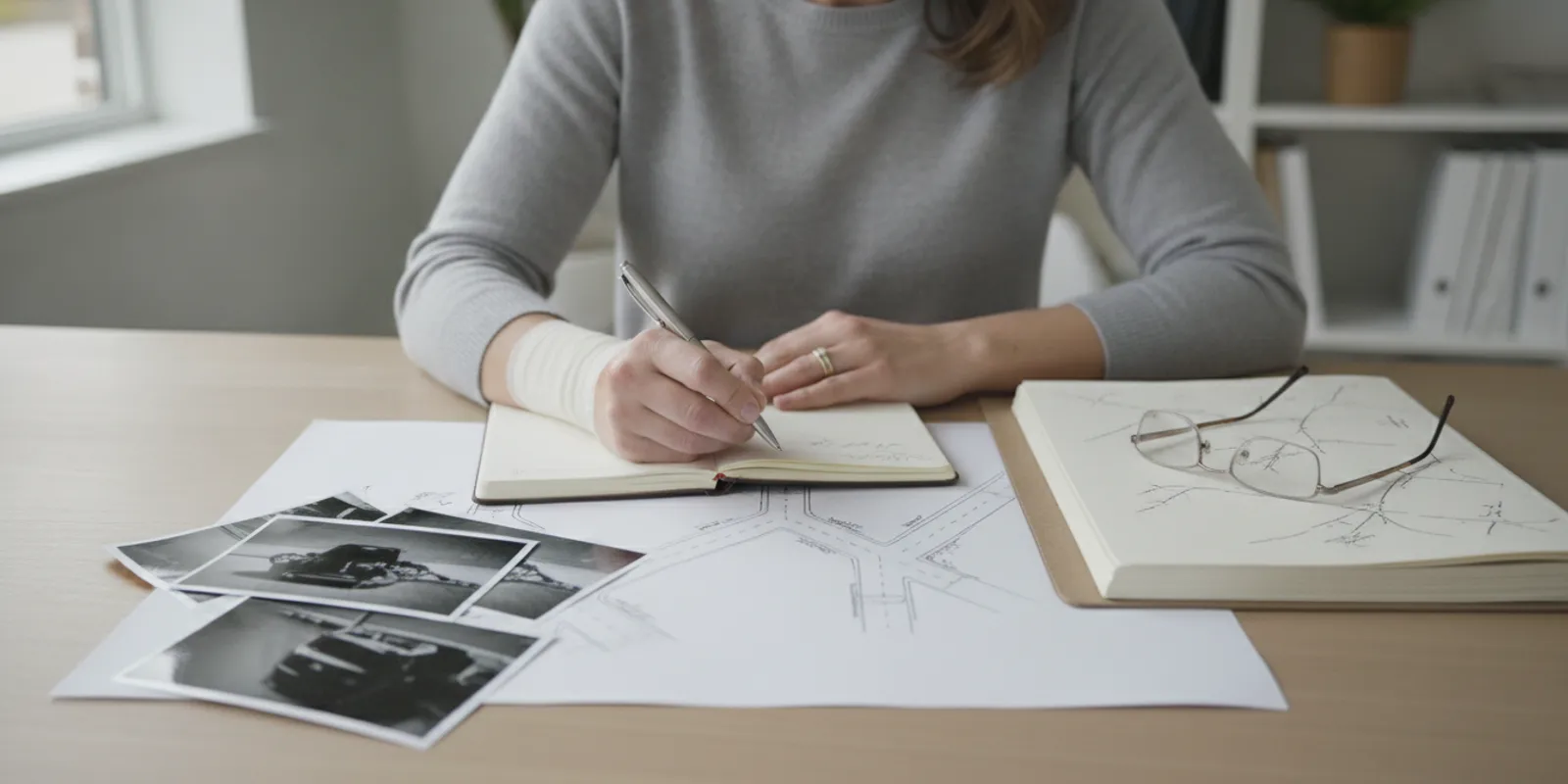
Photographs and video. Images taken soon after a crash may show details that are not obvious in a written account. If safe, photographs can document vehicle positions, damage, traffic controls, skid marks, weather, sight lines, and nearby businesses or cameras. Keep unedited originals and note the date, time, location, and photographer. Do not put yourself in danger to collect images. If a business or nearby resident may have video, ask promptly whether footage exists and how long it is kept; do not assume it will be retained.
Give files simple, descriptive names or keep them in folders by date and source. Preserve the original image instead of cropping out surrounding details or adding marks to it. If you need to point out a feature for your own notes, make a separate copy and leave the original unchanged. A short note explaining where a photograph was taken can matter later, especially when several images show different angles or locations.
Witness information. A witness can provide another account of what happened, but memories can fade. Record the person’s name and contact information if they are willing to share it. Write down when and where the conversation happened, and preserve any messages. Avoid coaching a witness or asking them to adopt your interpretation. If accounts differ, keep the distinction clear rather than trying to make them match.
Medical records. A collision report is not a medical evaluation. Symptoms can develop or become clearer after the scene is cleared. Seek appropriate medical care and describe your symptoms accurately. Keep visit summaries, referrals, imaging records, prescriptions, and notes about missed work or activity limits. Consistent records can help explain the timeline between the crash, symptoms, and treatment. For related information, see Hammack Law Firm’s page on types of losses that may be part of a car accident claim.
Other records. Save repair estimates, towing and rental documents, insurance letters, text messages, and notes from calls. Write down the name of each person you speak with, the date, and the main points. Keep a simple timeline of events, including when you requested the report and when you received it. A claim may also involve questions about how a crash occurred or what happened afterward; the firm’s page on steps to take at an accident scene offers additional context.
What if the report and your evidence do not match?
Do not ignore a difference, but do not assume it decides the claim by itself. First identify the exact point of disagreement. Is a name or location wrong? Does the diagram conflict with photographs? Does the report leave out a witness or describe an injury differently from later medical records? Each issue may call for a different kind of follow-up.
Make a short evidence list. For each disputed point, note what the report says, what other evidence shows, and what remains uncertain. For example, a report may list the intersection but not show a nearby driveway visible in scene photographs. The photographs may add useful context without proving exactly how the collision happened. Keep conclusions modest and distinguish what you personally observed from what another person told you.
Consider whether the apparent mismatch could have a straightforward explanation before deciding it is a mistake. A time on a report, for example, may reflect an estimate or a recorded time rather than the precise moment of impact. A diagram may be a simplified illustration, not a scaled map. Write down the question and ask the agency or a lawyer how to understand the record; do not silently revise it to fit your recollection.
If the report contains a factual mistake, follow the agency’s process for raising it. If the difference concerns fault or an interpretation, gather the supporting records rather than framing it as a clerical correction. You can also ask a lawyer to review the documents and explain what additional information may matter. Hammack Law Firm’s Greenville car accident page describes the firm’s work with people injured in crashes.
How can you keep the claim organized?
Create a paper or digital folder and use clear labels. Keep the report and any request or correction correspondence together. Store photographs in their original format, not only in a social media post or a compressed message. Keep medical, repair, and insurance documents in separate subfolders. A one-page timeline can make the sequence easier to follow.
- Record the date you requested the report and the date it arrived.
- Write down each question you have and the person or agency you contacted.
- Mark facts as confirmed, disputed, or not yet known.
- Keep copies of documents you send and note how you sent them.
- Do not post sensitive case details or another person’s private information online.
For example, a timeline could list the crash, medical visits, the date you requested the collision report, the day it arrived, and when you asked the agency about a possible error. Keep the source next to each entry: a calendar reminder, an email, a receipt, or your own dated note. This makes it easier to distinguish a documented event from a detail you are still trying to confirm.
Also be mindful of deadlines. The time limit that applies can depend on the circumstances and parties involved. Do not rely on a report request, an insurer’s review, or ongoing negotiations to pause a filing deadline. Review the relevant South Carolina car accident filing-deadline information and get case-specific guidance promptly. For help understanding what may happen during negotiations, see the firm’s discussion of how long a car accident claim may take.
Insurance communications are another reason to keep careful records. Be accurate and do not speculate when asked about details you do not know. Read written requests closely, keep copies of what you provide, and ask for clarification if a question is unclear. If a carrier disputes or denies a claim, the firm’s overview of reasons an auto insurer may deny a claim may help you identify questions to raise.
Ask Hammack Law Firm about your next steps
Frequently Asked Questions
How much does a South Carolina collision report cost?
The SCDMV collision-report page currently lists a $10 fee. Check the agency’s page or contact it before submitting a request to confirm the current amount, payment method, and any other requirements.
Does the report decide who caused the crash?
No. The report records information gathered by an officer, but it is not automatically a final decision on civil responsibility. Statements, photographs, medical records, witness accounts, and other evidence may also matter.
What should I do if my report has a mistake?
Identify the exact detail, gather reliable support, and contact the agency that prepared or maintains the report to ask about its correction process. Keep copies of your request and response. Do not edit the report yourself or guess at missing facts.
Should I wait for the report before getting medical care?
No. A report is not a medical assessment, and getting a copy is not a substitute for care. Seek appropriate medical attention when needed and follow your provider’s guidance. Keep records of your symptoms and treatment.
Can I use the report without any other evidence?
You can provide it as part of a claim, but it may not answer every question. Preserve photographs, witness information, medical records, and relevant communications when available, and consider how each item supports or complicates the account.
Contact Hammack Law Firm to discuss your situation
Organizing the report alongside the rest of your records can help you ask focused questions about what to do next.