

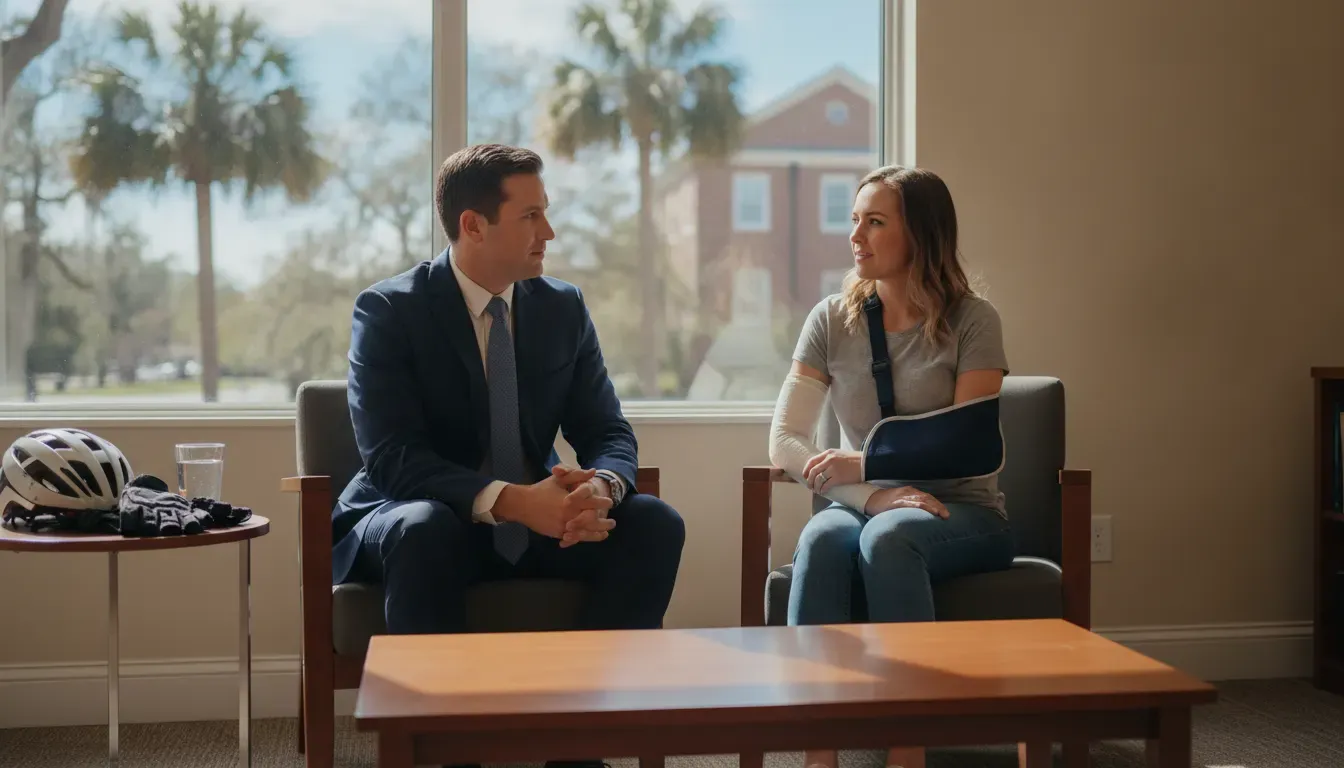
After a bicycle crash, choosing legal counsel can feel like another decision to make while you are managing pain, medical appointments, and insurance calls. If you are asking how to choose a bicycle accident lawyer, focus on how the lawyer handles facts like roadway evidence, injury documentation, coverage questions, and communication. A thoughtful consultation should help you understand the process without pressure to make an immediate decision.
Talk with Hammack Law Firm about your South Carolina bicycle accident
Start with the kind of help your bicycle case requires
Choosing counsel is not only about finding someone with a law office nearby. A bicycle collision can involve traffic movements, visibility, roadway design, vehicle damage, medical evidence, insurance policies, and questions about how the crash occurred. The lawyer you consult should be willing to explain how those facts will be gathered and evaluated in your specific situation.
Before scheduling a consultation, write down the basic facts: when and where the collision occurred, whether a motor vehicle was involved, what injuries were diagnosed, whether an incident report exists, and whether an insurer has contacted you. You do not need to solve the legal questions before the meeting. The purpose of the meeting is to identify what is known, what remains unclear, and what should happen next.
What bicycle accident experience should you ask about?
A useful answer should connect the lawyer’s experience to the facts that make your collision different. Ask about work involving bicycle crashes, roadway evidence, disputed fault, serious or delayed injuries, uninsured or underinsured coverage, hit-and-run facts, dooring collisions, and claims involving a driver who was working. You are looking for a clear explanation of how those issues may affect investigation and strategy.
- How often do you handle personal injury claims involving bicyclists?
- Have you handled collisions involving a turning vehicle, a parked-car door, a failure to yield, or a hit-and-run?
- How would you investigate the roadway, traffic controls, visibility, vehicle damage, and witness accounts?
- How do you evaluate an injury claim when symptoms or treatment continue after the crash?
- Have you handled insurance disputes involving uninsured or underinsured motorist coverage?
- Who will be responsible for investigating and communicating about my case?
A lawyer does not need to promise a result to demonstrate relevant experience. A useful consultation should identify the evidence that could support or weaken different explanations of the crash. Be cautious of predictions made before the lawyer has reviewed the available records. Bicycle claims are fact-specific, and a responsible evaluation should leave room for facts that are not yet known.
How can you evaluate communication and personal attention?
Communication is part of legal service, not an afterthought. During the consultation, notice whether the lawyer listens to your account, answers the question you asked, explains unfamiliar terms, and tells you who will respond when you need an update. You should also understand how the firm will communicate, such as by phone, email, video meeting, or an online client portal.
Ask practical questions before signing an agreement:
- Who will be my primary point of contact?
- How often should I expect case updates?
- What is the usual response process for an urgent insurance or medical issue?
- Will I speak directly with the lawyer about settlement decisions?
- How will you explain important deadlines, offers, requests, and changes in strategy?
- What information should I send, and how should I send it securely?
The goal is not to demand a guaranteed response time for every situation. The goal is to understand the communication plan and decide whether it matches your needs. A person recovering from a bicycle injury may need explanations in plain language and a reliable way to ask questions. If the first meeting feels rushed or unclear, ask for clarification before deciding whether the relationship is a good fit.
What should you ask about fees and case costs?
Do not rely on a general statement about fees. Ask the lawyer to explain the written representation agreement before you sign it. The agreement should identify how legal fees are calculated, which case expenses may be charged, when expenses are paid, and what happens if the claim does not resolve or the representation ends. The exact terms depend on the agreement and the circumstances of the case.
| Question | Why it matters |
|---|---|
| How is the legal fee calculated? | It helps you understand whether the fee is based on a percentage, a different arrangement, or another term in the agreement. |
| How are case expenses handled? | Investigation, records, filing, expert, or other expenses may be treated differently from the legal fee. |
| When are expenses deducted? | The timing can affect how you understand a settlement statement and the amount distributed to you. |
| Does the arrangement change if a lawsuit is filed? | Ask whether the written terms change when the case moves from an insurance claim to litigation. |
| What happens if the representation ends? | The agreement should explain responsibilities, unpaid amounts, and transfer of the file. |
Ask for a copy of the agreement and take time to read it. If a term is unclear, ask the lawyer to explain it in plain language. You can also ask whether a separate agreement or authorization is needed for medical records, liens, or communications with an insurer. A clear fee discussion protects both sides from avoidable confusion later.
How does evidence affect the lawyer you choose?
The right lawyer for a bicycle collision should have a plan for preserving and organizing evidence, not just a general description of personal injury law. Evidence may include photographs, video, witness information, police or incident reports, vehicle and bicycle damage, clothing and helmet condition, medical records, wage information, insurance correspondence, and messages about the crash.
South Carolina’s Department of Public Safety explains that bicyclists on public roadways have duties and privileges that apply to motor vehicles, while the details of a collision still depend on the roadway, traffic movements, and available proof. Its public bicycle-law guidance is a useful starting point, but it is not a substitute for reviewing your facts and the current South Carolina Code. You can also review the South Carolina Code Title 56, Chapter 5 and the South Carolina Department of Public Safety bicycle guidance.
Ask these evidence-focused questions:
- What evidence should I preserve before repairing or replacing the bicycle, helmet, clothing, or equipment?
- How will you look for nearby business, traffic, doorbell, or vehicle video?
- How will you identify and contact witnesses?
- What medical records and treatment information will help explain the injury?
- How should I respond if an insurer requests a recorded statement or broad medical authorization?
- What should I do with photographs, messages, receipts, and claim correspondence?
Before the consultation, keep the bicycle and damaged equipment in their post-crash condition if it is safe and practical. Save original photographs and videos, and do not edit the files. Keep copies of medical bills, discharge paperwork, prescriptions, work restrictions, pay records, and insurer communications. If evidence has already been lost or the bicycle was repaired, tell the lawyer. Accurate information allows the lawyer to plan around what remains available.
What does case fit mean in a bicycle injury consultation?
Case fit means the lawyer’s services, practice, communication style, and approach match the needs of your claim. It does not mean the lawyer can guarantee that a claim will succeed. A case may involve a straightforward insurance question, disputed responsibility, serious injuries, a hit-and-run driver, a commercial vehicle, or several possible sources of coverage. Ask how the lawyer would identify the next decision point in your case.
Consider whether the lawyer:
- Can describe the next steps without pretending every fact is already known.
- Explains what the firm can handle and what may require another professional or referral.
- Identifies possible conflicts or limitations before accepting the matter.
- Understands your goals, concerns, medical situation, and preferred communication method.
- Explains how settlement decisions remain yours to make after receiving legal advice.
- Is licensed to handle the matter in the jurisdiction where the claim will proceed.
Hammack Law Firm serves clients in South Carolina and Georgia. The firm’s South Carolina bicycle accident resources include its Greenville bicycle accident page and Pickens bicycle accident page. A location page can provide general information about the firm’s services, but a consultation is where the facts of an individual crash can be discussed.
What should you bring to a bicycle accident consultation?
You do not need a complete case file to schedule a consultation. Bringing organized information can make the conversation more useful and help the lawyer identify missing evidence. If you cannot gather everything because of your injuries, explain that. Your health and immediate treatment needs come first.
- A short timeline of the crash, emergency response, medical care, and insurer contact.
- Photographs or video of the roadway, bicycle, vehicle, injuries, clothing, helmet, and surrounding area.
- The names and contact information of witnesses, drivers, passengers, responding officers, and medical providers.
- Police or incident reports, insurance cards, claim numbers, letters, emails, and recorded-statement requests.
- Medical records, bills, prescriptions, appointment information, and work restrictions that you already have.
- Receipts, repair estimates, bicycle purchase information, equipment records, and photographs from before the crash.
- A list of questions about fees, communication, evidence, deadlines, and who will make decisions.
Make a note of what you do not know. For example, you may not know whether a nearby camera recorded the collision or which policy applies to a driver. A good consultation should distinguish confirmed facts from open questions instead of treating assumptions as conclusions.
What are warning signs during the hiring process?
A consultation is also an opportunity to decide whether the process feels clear and respectful. Warning signs include pressure to sign before you understand the agreement, promises of a specific outcome before a factual review, unclear answers about who will handle the case, and reluctance to explain fees or expenses. A lawyer should also tell you when the firm cannot take the matter or when another type of professional may be needed.
Do not hide unfavorable facts, prior claims, gaps in treatment, social media posts, or conversations with an insurer. Your lawyer needs accurate information to assess risk and plan the case. If you have already signed an agreement with another firm, explain that before seeking a new arrangement. There may be professional and financial issues that require review before a change can be made.
After meeting with counsel, compare the substance of the explanations rather than marketing language. Consider whether you understand the proposed process, the communication plan, the fee agreement, the evidence needs, and the decisions you will make. You should have enough information to choose deliberately.
When should you contact a bicycle accident lawyer?
You can seek a consultation after a bicycle collision even if you are still gathering information. Earlier guidance may help preserve time-sensitive evidence, respond to insurer requests, and organize medical and financial records. You may also want legal guidance when responsibility is disputed, injuries are serious or continuing, a driver left the scene, coverage is unclear, or an insurer asks you to make a recorded statement.
Deadlines can depend on the people involved, the type of claim, government participation, insurance terms, and other facts. Do not assume that a general online deadline applies to your situation. Keep claim documents and ask about the time limits that may affect your rights. General information cannot replace advice about a particular collision.
For a related explanation of potential coverage questions, review Hammack Law Firm’s guide to what insurance may cover bicycle accidents in South Carolina. The coverage article and this checklist address different questions: one discusses possible policies, while this guide focuses on evaluating counsel and preparing for a consultation.
Contact Hammack Law Firm to discuss your bicycle injury questions
Frequently Asked Questions
How many bicycle accident lawyers should I speak with?
There is no required number. Speak with enough lawyers to understand the proposed approach, communication plan, fee agreement, and case fit. If you have a serious injury or a complicated coverage question, more than one consultation may help you compare explanations. Do not delay necessary medical care or evidence preservation while arranging meetings.
What should a bicycle accident lawyer review first?
The lawyer will usually want the basic crash facts, injury and treatment information, available photographs or video, witness details, reports, insurance correspondence, and any deadlines you know about. The first review may identify missing information rather than answer every question. Be candid about what happened and what records are unavailable.
Should I speak with an insurer before choosing a lawyer?
You may need to report a claim under an applicable policy, but be careful with detailed statements about fault, injuries, or the value of a claim. Preserve requests and correspondence, and ask for legal guidance if an insurer requests a recorded statement, broad authorization, or a quick settlement. Do not ignore policy notices or deadlines.
What if I do not know who caused the bicycle crash?
Tell the lawyer what you remember without guessing. Photographs, roadway design, traffic controls, vehicle damage, witness accounts, video, and medical records may help clarify what happened. If the driver left the scene or responsibility is disputed, mention that at the consultation because the investigation and insurance questions may differ.
What if my injuries appeared after the crash?
Seek medical evaluation and follow the recommended treatment plan. Some symptoms may develop or become more noticeable later, but only a medical professional can evaluate your condition. Keep appointment records, bills, instructions, and notes about limitations. Tell the lawyer when symptoms began and how they have affected daily activities.
Choosing counsel is a personal decision. Look for clear answers, relevant bicycle-case experience, a written fee explanation, a realistic evidence plan, and communication that works for you. Hammack Law Firm can review the circumstances of a South Carolina or Georgia bicycle injury consultation and explain possible next steps based on the information available.
Request a consultation with Hammack Law Firm

With over 25 years of legal experience, Paul Hammack provides his clients with a level of trial expertise and strategic insight rarely found in personal injury litigation. Having spent the first eight years of his career working within major insurance defense firms across Georgia and South Carolina, Paul gained an intimate understanding of the “other side’s” playbook. This insurance industry background serves as a unique differentiator for his clients; he knows exactly how insurance carriers evaluate risk and what motivates them to pay top dollar for a claim.
In 2008, Paul founded Hammack Law Firm to move away from the “plaintiff mill” model and focus on building personal relationships with those he represents. As a seasoned litigator, he has tried dozens of first-chair cases to verdict, specializing in high-stakes litigation involving catastrophic injuries and complex truck accidents. His dual-state practice allows him to provide aggressive representation across both South Carolina and Georgia, ensuring victims of negligence receive the maximum financial compensation possible regardless of which side of the state line the accident occurred.
Paul’s commitment to excellence is reflected in his record of significant achievements, including a $10 million tractor-trailer wrongful death settlement and a $3.9 million moped-versus-truck recovery. His credentials and bar admissions in both South Carolina and Georgia underscore his deep roots in the regional legal community. Beyond the courtroom, Paul is a dedicated advocate for his local community, contributing his time and resources to organizations such as the United Way, Red Cross, and Hands On Greenville, all while working to make South Carolina a safer place for everyone.


